
Hearing that your child needs a crown can be surprising, especially when the problem is in a baby tooth. You may wonder whether a filling would work or whether treatment can wait.
Child dental crowns are protective caps used for weak or extensively damaged teeth. They restore strength, support comfortable chewing, and help avoid repeat repairs. Here is when a crown may be needed and what parents should expect.
What Is A Child Dental Crown?
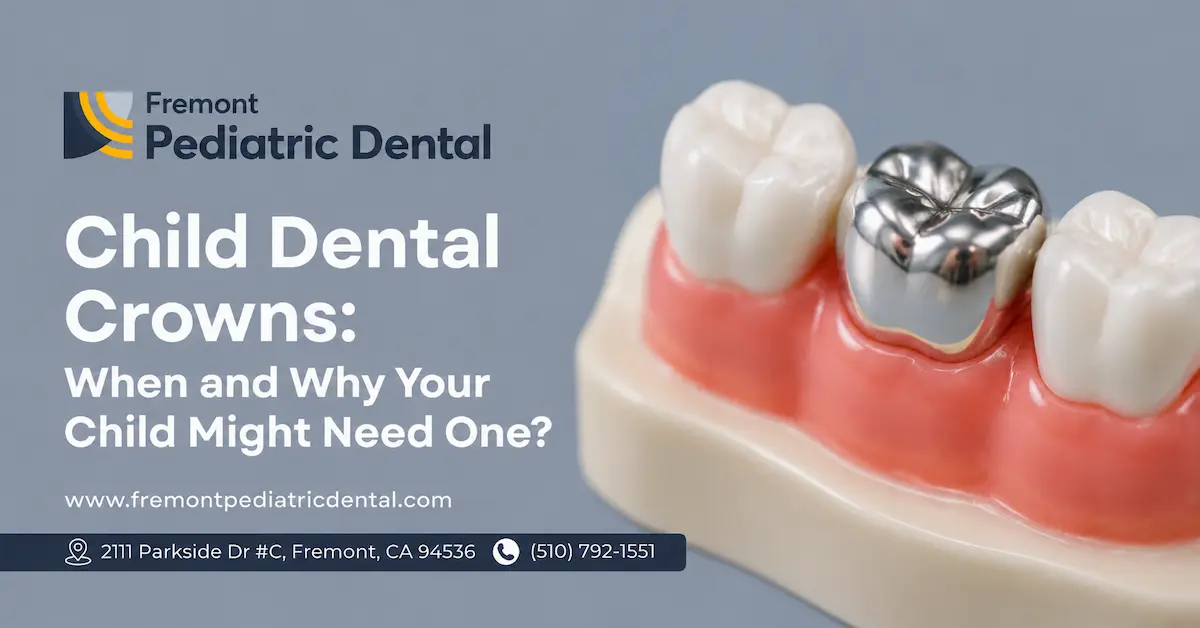
A child dental crown is a tooth-shaped cap placed over the visible tooth. A filling repairs one damaged area, while a crown covers most or all of the tooth.
Crowns may protect teeth affected by tooth decay in kids, breaks, or too little healthy structure. The crown does not replace the tooth. It protects what remains and restores its useful shape.
When Are Child Dental Crowns Needed?
Not every cavity needs a crown. The decision depends on the amount and location of damage, the strength of the remaining tooth, and how long the tooth should stay.
Dr. Andrea Salazar Dinh can review the tooth, explain any dental images, and show parents why a crown, filling, or another option may fit.
When A Cavity Is Too Large
A filling needs a strong tooth around it. When damage reaches several sides, a large filling may loosen or leave weak areas exposed. A crown provides wider protection.
When A Tooth Is Broken Or Weak
A fall, hard bite, or naturally weak tooth can cause cracking. Tooth fracture treatment may include a crown when the tooth can be saved but needs added strength.
When Earlier Treatment Needs Protection
A tooth may become weaker after deeper repair. Covering it can reduce the chance of another break and help the child keep chewing comfortably.
When A Filling Keeps Failing
Repeatedly replacing a loose or broken filling may not solve the problem. A crown can be more dependable because it covers the full chewing surface.
Crown Or Filling: Which Works Better?
A dental filling for kids often works for a small cavity when plenty of strong teeth remain. A crown may be better when damage is large, several sides are weak, or a previous filling has failed.
For example, one small spot may need a filling. Damage across the top and both sides may need full coverage. The American Academy of Pediatric Dentistry guide to treating tooth decay also supports crowns for extensively damaged baby teeth that cannot hold fillings well. Research reviews suggest crowns may reduce major failure and long-term pain compared with fillings in badly damaged baby back teeth.
Why Save A Baby Tooth?
Baby teeth help children chew, speak, and hold space for adult teeth. Losing one too early may let nearby teeth move into the open space.
A crown normally stays until the baby tooth falls out naturally. When saving the tooth is not practical, tooth extractions and a possible space maintainer can help protect the developing smile.
Which Child Dental Crown Fits?
Crown choice depends on tooth location, remaining strength, appearance, and chewing pressure.
Silver Crowns For Back Teeth
Silver crowns are commonly used for back baby teeth because they handle chewing well. Their color is noticeable, so parents may want to discuss appearance.
White Crowns For Visible Teeth
White crowns blend with nearby teeth and may suit visible areas. They may fit differently or cost more. The best choice depends on the tooth rather than appearance alone.
What Happens During Crown Treatment?
The visit begins with an exam and, when needed, digital dental X-rays to view hidden damage. The area is numbed, damaged parts are cleaned away, and the tooth is shaped. The cap is secured, and the bite is checked.
Many baby-tooth crowns can be completed in one visit. Dr. Dinh explains each step in child-friendly words. A child-focused team may use breaks, distraction, and gentle restorative care. Sedation dentistry for children may be discussed when extra comfort support is appropriate.
How Should A Child Crown Be Cared For?
Wait until numbness ends before chewing. Offer soft food if the area feels tender. Brush twice daily, clean between teeth, and limit sticky candy.
Keep regular dental checkups so the crown and bite can be checked. Call the office if it loosens, falls out, feels too high, or is followed by growing pain or swelling. Never use household glue.
What Should Parents Ask About Crowns?
Ask how much healthy tooth remains, why a filling may not last, and how long the baby tooth should stay. Discuss crown choices, visit length, comfort options, and what may happen if treatment is delayed.
Also ask whether removing the tooth is reasonable. Clear answers should help you understand the goal without feeling rushed.
Protect A Damaged Tooth Early
A crown is not needed for every cavity, but it can protect a tooth when a smaller repair may fail. Early care may prevent pain, repeat visits, and further damage.
Ask to see the damaged area, compare a crown with a filling, and discuss how long the baby tooth should remain. A clear explanation makes the decision easier.
Why Choose Fremont Pediatric Dental?
Fremont Pediatric Dental provides child-focused crown care in a calm, supportive setting. Dr. Dinh explains why treatment is recommended, compares suitable options, and helps children feel prepared before work begins. Families receive practical aftercare guidance and clear answers designed to support confident decisions about their child’s damaged tooth.
Child Dental Crown FAQs
Does My Child Really Need A Crown On A Baby Tooth?
A baby tooth may need a crown when a large cavity or break leaves too little strong tooth for a filling. The crown protects chewing, limits further damage, and helps hold space until the tooth falls out naturally.
Is A Crown Better Than A Filling For A Child?
A filling is often best for a small damaged area with strong tooth around it. A crown may last better when several sides are weak, the cavity is large, or an earlier filling has failed. The dental exam guides the choice.
Will Getting A Dental Crown Hurt My Child?
The tooth and nearby area are numbed before treatment, so children should feel pressure rather than sharp pain. Mild tenderness can occur afterward. Call the dental office if discomfort worsens, swelling appears, or eating remains difficult.
What Happens If My Child’s Crown Falls Off?
Keep the crown if you can, avoid sticky or hard foods, and call the dental office promptly. Do not use household glue or push the crown back into place. The tooth should be checked for damage before the crown is secured again.
Will A Baby Tooth Crown Fall Out Naturally?
Yes. A crown placed on a baby tooth usually comes out with that tooth when the adult tooth is ready to grow in. It should not be removed early unless the dentist finds a problem or recommends a different plan.