
Watching your baby’s teeth coming out is a very exciting moment for all the parents, but it can be a painful process for you and your baby. The two-year molars are also called second molars that erupt in your toddler’s mouth. If you’re wondering how long they take to come in, we’ll explain it in this article.
When Do 2-Year Molars Come in?
Babies’ first molars start coming in between 13 and 19 months, while two-year-old molars take a longer time and arrive in the mouth, usually within 23 and 33 months.
The mandibular second molars age is around 23 and 31 months, and the maxillary second molars take around 25 and 33 months to erupt fully in the mouth.
How Long Does the Full Eruption Process Take?
From the first sign of swelling to the tooth fully breaking through, the process for each molar can stretch out over several weeks to a couple of months. Molars are larger and flatter than other teeth, so they tend to take longer to push through the gum than a child’s earlier teeth did. It’s also common for the eruption to happen in stages, you may see a little white edge poking through, then a pause, before the tooth continues to emerge.
How Long Does It Take for One Molar to Break Through Once You See Symptoms?
Once you notice the classic signs (swollen gums, drooling, chewing on everything), the actual breakthrough for that specific tooth usually happens within a few days to about two weeks. Every child is different, some molars pop through with barely a fuss, while others take longer and cause more noticeable discomfort.
How Long Does the Pain Last?
The most intense discomfort, the fussiness, disrupted sleep, and gum sensitivity, typically lasts about one to two weeks per molar. Because your toddler has four second molars coming in (not always at the same time), it can feel like teething never quite ends during this stretch, but the acute pain for any single tooth is usually short-lived.
2-Year Molars Symptoms: What to Watch For
Most of the toddlers won’t be able to tell their parents that there is something wrong. So, some signs help you recognize when your child’s second molars are coming in: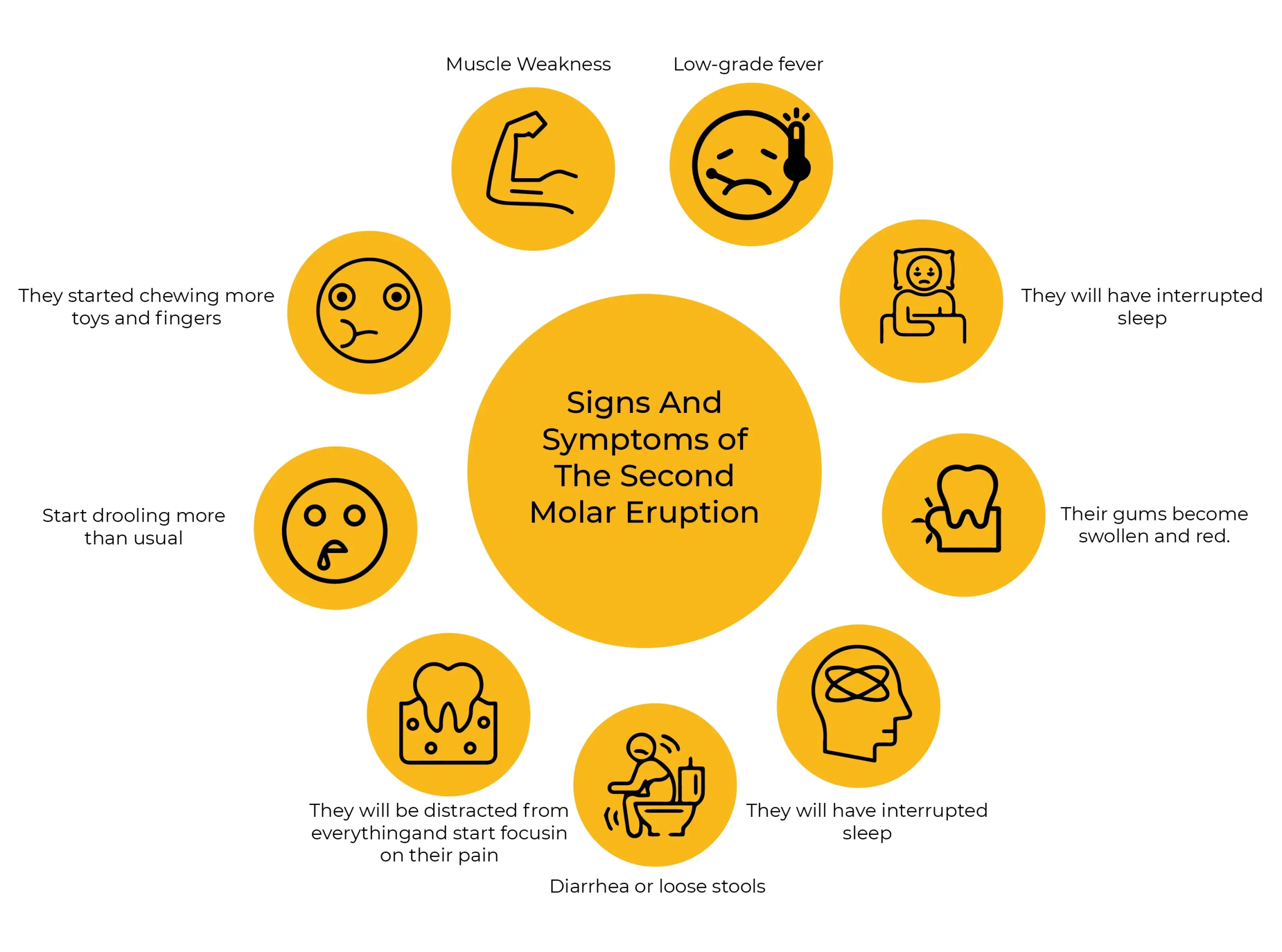
- They started chewing more toys and fingers.
- Start drooling more than usual.
- Rubbing the gums
- Muscle Weakness
- Diarrhea or loose stools
- Their gums become swollen and red.
- Low-grade fever
- They will have interrupted sleep.
- They will be distracted from everything and start focusing on their pain.
Home Remedies To Relief The Teething Pain:
Following are the effective home remedies you can try to give your toddler relief from the teething pain:
- Put a wet washcloth in the freezer for 15 to 30 minutes, and then let your child munch and chew it.
- Give them frozen bananas and berries.
- Offer them a teething ring.
- Gently Massage or Rub the gums of your child with your finger.
- Chewy toys
- Could you give them a sippy, cool cup of water? It is the best choice once your baby is older than 6 to 9 months.
- The over-the-counter medications that can be used to give instant teething pain relief to your baby are Acetaminophen or ibuprofen.
- You can also try a few distraction techniques like singing songs, coloring books, and dancing that can help your child forget about their intense pain.
- They will be distracted from everything and start focusing on their pain.
Food To Give Your Child While Teething
Try to give them apples, carrots, and cucumbers and tell them to chew from the side of their mouth from where second molars are arriving. First of all, ensure they are cut off into smaller pieces to prevent choking.
Harmful Medication Products To Avoid
Earlier, teething medications were frequently used to relieve pain in babies. But now, the U.S. Food and Drug Administration warns us against some medications and products because of their harmful side effects.
- Gels And Pastes:
Many teething gels and pastes, such as Anbesol, Orajel, and Orabase, are available for pain relief when second molars come in. However, FDA and other organizations researched deeply about it, and they discovered that these gels and pastes are made from harmful Ingredients such as benzocaine. This ingredient can be a main cause of severe blood disorders, such as methemoglobinemia. - Tablets for Teething:
FDA discovered after the lab testing of multiple homoeopathic teething tablets for pain relief that these contain a high level of a toxic substance known as Nightshade from Belladonna. - Teething Necklace:
These types of teething devices and products are manufactured with amber material that can cause choking if a piece of it gets broken and swallowed by your child.
Can 2-Year Molars Coming in Cause Fever?
Teething can cause a mild, low-grade fever in some toddlers, generally under 101°F, due to the inflammation around the erupting tooth. However, teething does not cause a high fever on its own. If your child’s temperature climbs above 101°F, or the fever lasts more than a day or two, it’s likely caused by something other than teething (such as an unrelated cold or infection), and it’s worth checking in with your pediatrician or pediatric dentist rather than assuming it’s the molars.
Can 2-Year Molars Cause Diarrhea?
This is one of the most common questions parents ask, and it’s a bit of a myth. Pediatric research hasn’t found a direct, proven link between teething and diarrhea. What’s more likely happening is that teething toddlers drool more and put more things in their mouths, which can lead to swallowing extra saliva or picking up minor stomach bugs around the same time their molars are coming in, making it seem connected. Mild, occasional loose stools alongside teething aren’t usually cause for concern, but ongoing diarrhea, dehydration, or diarrhea paired with a real fever should be evaluated by your child’s doctor, since it’s more likely a separate illness than the molars themselves.
Can Teething Pain Get Worse at Night?
Yes, teething pain can feel worse at night. When your child is tired and less distracted, they may focus more on the discomfort, making it harder for them to fall asleep.
Surviving the Sleep Disruption: What to Expect at Night
If your toddler’s 2-year molars seem to save all their fussiness for bedtime, you’re not imagining it. Discomfort often feels worse at night simply because there are fewer distractions to take your child’s mind off it — which means more night waking, more trouble settling down, and more disrupted sleep for the whole family for a stretch of days.
A few things that can help:
- Stick to the bedtime routine. Consistency helps your toddler feel secure even when they’re uncomfortable.
- Offer pain relief before bed, not after they wake up. If your pediatrician has approved a dose of acetaminophen or ibuprofen, timing it ahead of the worst discomfort (rather than reacting once your child is already awake and upset) tends to work better.
- Keep a cold teether or chilled washcloth within reach so you can offer it quickly during a middle-of-the-night wake-up without fully waking your child.
- Remember it’s temporary. The roughest nights typically cluster around one to two weeks per molar, not the entire multi-month eruption window.
If sleep disruption is severe, lasts well beyond two weeks, or you’re noticing other symptoms alongside it, check in with your pediatric dentist to rule out anything beyond normal teething.
Conclusion:
Caring for your toddler can be a difficult time for you and your baby when it’s their second molar age of arrival. But you can use the home remedies we’ve listed above, which may help your baby to get relief from the teething pain. Remember that the teething pain is temporary, but once your baby gets their second-year molars, your child feels much better than before. If the pain persists or you have concerns, consulting a pediatric dentist can help ensure your child’s teeth are developing properly and provide additional relief options.