
A baby tooth falling out is usually exciting, but it can be worrying when it happens years earlier than expected. Early baby tooth loss does not always mean treatment is needed. The answer depends on which tooth was lost, how soon the adult tooth is expected, and whether nearby teeth are moving.
A dental visit can show whether the gap should be watched or protected with a space maintainer.
Is The Baby Tooth Really Early?
Children do not lose every baby tooth at the same age. Front teeth usually loosen before back teeth, and children of the same age may follow different timelines.
Normal Tooth Loss
Natural tooth loss usually starts with gradual loosening. The adult tooth may already be close behind, and the child is within the expected age range for losing that tooth. The area may only need monitoring during regular dental check-ups.
Unexpected Tooth Loss
A baby tooth lost too early may follow a fall, sports accident, deep cavity, swelling, or planned removal. Contact the dentist even if your child is not in pain. For bleeding, a broken tooth, or facial swelling, emergency dentistry for kids can provide timely guidance.
Why Does The Tooth Gap Matter?
Baby teeth help children chew, speak, and save places for adult teeth. When a back baby tooth disappears too soon, nearby teeth may slide into the open space.
Imagine a six-year-old loses a back tooth that should remain for several more years. The tooth behind the gap may move forward. When the adult replacement is ready, the opening may be too small.
This can contribute to orthodontic crowding and alignment issues. It does not guarantee braces, but it may make future orthodontic care more involved. The American Dental Association explains that holding the gap can preserve room for the adult tooth.
When Does Early Baby Tooth Loss Need A Space Maintainer?
Not every missing baby tooth needs a device. The decision depends on the gap’s location, the child’s tooth development, and how long the adult tooth may take to appear.
Space Maintainer Is More Likely
A space maintainer is more likely when a back tooth was lost years early, the adult tooth is still far below the gum, nearby teeth are shifting, the child already has limited room, or several baby teeth are missing.
Monitoring May Be Enough
Monitoring may be reasonable when the adult tooth is close to appearing, the gap remains stable, or the child naturally has plenty of room. Dr. Dinh can compare the missing tooth with the child’s age and tooth pattern, then explain why watching the area may be better than placing an unnecessary device.
Front Tooth Versus Back Tooth
Early loss of a front baby tooth often creates more concern about appearance or speech than spacing. Back teeth usually need closer attention because they preserve room for later adult teeth. Still, the decision depends on the individual child.
How Does A Child’s Dentist Decide?
The dentist checks which tooth was lost, when it happened, how much room remains, and whether nearby teeth have moved.
A digital X-ray may show where the adult tooth is and whether it is close to coming in. Dr. Dinh can use these findings to guide parents toward space protection or monitoring instead of giving every child the same plan.
What Does A Space Maintainer Do?
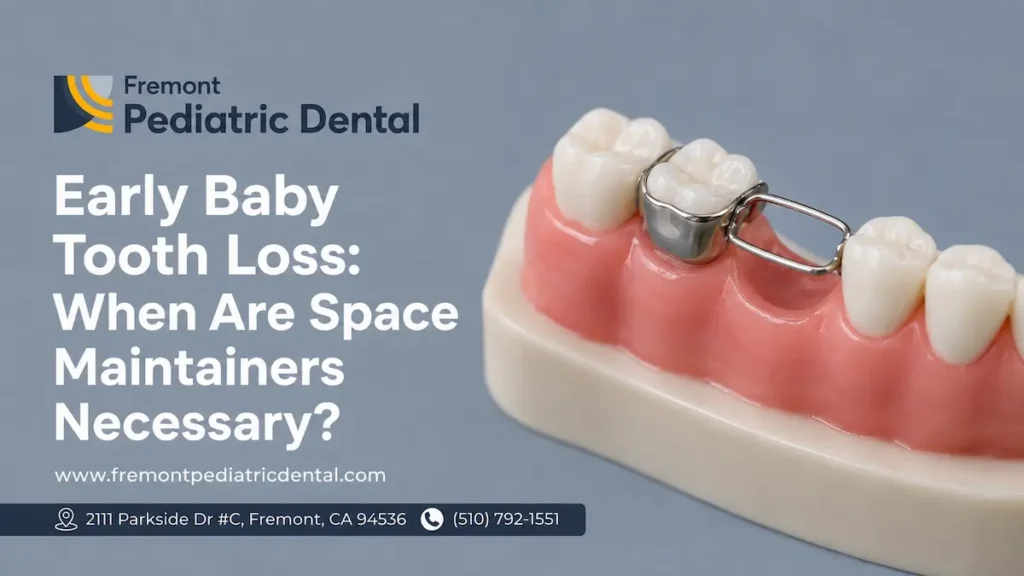
A space maintainer is a small, custom-made device that keeps a missing-tooth gap open. It does not replace the tooth or straighten the whole smile. It stops nearby teeth from taking over room meant for the adult tooth.
Some maintainers stay attached until the dentist removes them. Others can be taken out and may suit older children who can follow cleaning instructions.
A space maintainer cannot promise that braces will never be needed. Inherited crowding, bite concerns, or jaw growth may still create alignment issues. However, protecting the gap can remove one avoidable cause of crowding.
What Parents Should Expect After Space Maintainer Placement
The dentist examines the gap and may take a scan, mold, or X-ray. If a maintainer is recommended, it is made to fit the child’s mouth. It may feel unfamiliar for a few days.
Most children can speak, attend school, and eat normal meals after adjusting. Dr. Dinh explains the device in child-friendly language and shows parents how to keep it clean.
Follow-up visits matter because the dentist must watch the adult tooth and remove the maintainer at the right time.
Which Space Maintainer Care Tips Matter?
Help your child brush around the device and follow any flossing instructions. Avoid sticky candy, chewing gum, ice, and very hard foods that may pull or bend it. Discourage touching it with fingers or pushing it with the tongue.
Call the dentist if it becomes loose, breaks, causes lasting soreness, or traps food. If it comes out, keep it in a clean container. Do not glue or reshape it at home.
What Should Parents Do After Early Tooth Loss?
Tell the dentist which tooth was lost, when it happened, and whether there was an injury or cavity. Ask:
- Is the adult tooth close to coming in?
- Have nearby teeth started to shift?
- Does the gap need protection or only monitoring?
Do not wait for the next routine visit when a back tooth is unexpectedly lost. Early assessment offers more choices before the space becomes smaller.
Why Choose Fremont Pediatric Dental?
Fremont Pediatric Dental helps families understand whether early tooth loss needs monitoring or space protection. Dr. Dinh and the team explain each finding clearly, adapt visits to the child’s comfort, and provide practical home-care guidance. Parents receive a focused plan designed around their child’s tooth development and current spacing needs.
Early Baby Tooth Loss FAQs
Does Every Baby Tooth Lost Too Early Need A Space Maintainer?
No. A space maintainer is mainly considered when a back baby tooth is lost well before the adult tooth is ready. If the new tooth is close, the gap is stable, or a front tooth was lost, monitoring may be enough.
What Happens If Nearby Teeth Have Already Shifted?
If nearby teeth have moved into the gap, a regular space maintainer may not reopen the lost room. The dentist will measure the change and may suggest monitoring, a different device, or future orthodontic care.
Can A Space Maintainer Prevent Future Braces?
A space maintainer may reduce crowding caused by early baby tooth loss, but it cannot prevent every reason for braces. Inherited spacing, bite patterns, and jaw growth can still cause alignment issues as adult teeth appear.
How Long Will A Child Wear A Space Maintainer?
A child usually wears a space maintainer until the adult tooth is close to entering the gap. The timing may be months or years, so regular check-ups help the dentist remove it before it blocks the incoming tooth.
What Should I Do If The Space Maintainer Is Loose?
Call the child’s dentist promptly. Do not pull, bend, or glue the device at home. If it falls out, store it in a clean container and bring it to the visit so the dentist can decide whether to refit or replace it.