
Parents often hear about sealants and fluoride during a child’s dental visit, but the difference is not always explained clearly. In the dental sealants vs fluoride comparison, neither option is automatically better.
Sealants cover the deep grooves in molars, while fluoride treatment helps strengthen enamel across more tooth surfaces. Many children benefit from both. The right choice depends on age, tooth shape, habits, and cavity history.
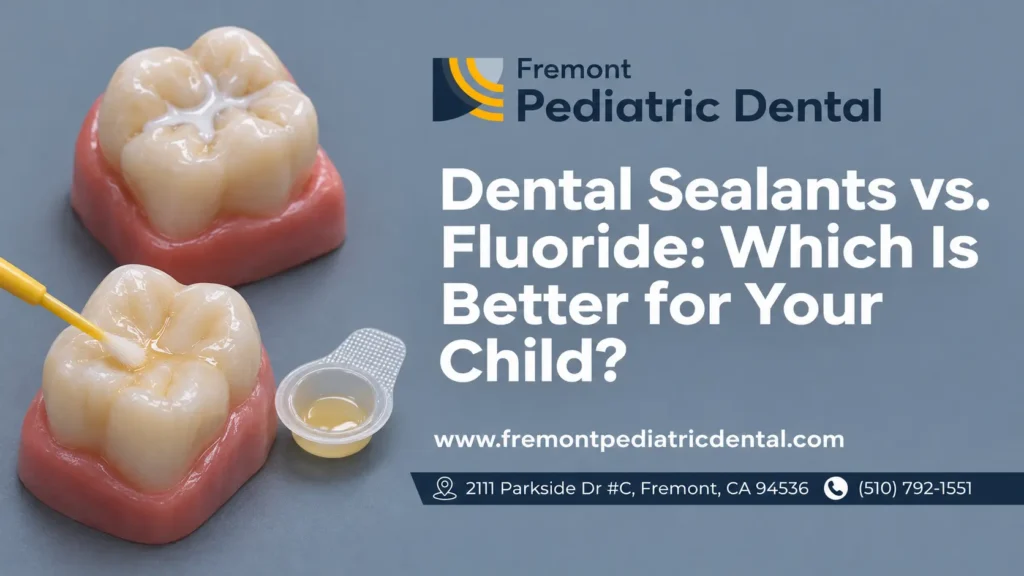
How Dental Sealants and Fluoride Protect Teeth
Think of sealants as a raincoat for the chewing surface of a back tooth. They form a thin covering that blocks food and bacteria from settling into narrow grooves.
Fluoride works differently. It supports the outer surface of teeth, helping them stay stronger when exposed to acids from plaque, snacks, and drinks. Sealants provide targeted protection, while fluoride offers wider support. Together, they can improve a child’s preventive dental care.
Dental Sealants Protect Molars
Dental sealants for children are usually placed on the chewing surfaces of back teeth. These teeth often have small pits and lines where food collects.
Deep Grooves Trap Food
Even a child who brushes carefully may not reach the bottom of deep grooves in molars. Toothbrush bristles can clean the top surface but may pass over narrow spaces.
A sealant smooths these areas, making them easier to keep clean and helping the child avoid cavities.
Sealant Visits Stay Simple
The tooth is cleaned and dried before the liquid coating is painted over its grooves. It is then hardened and checked.
There is normally no drilling or numbing when a healthy tooth is being sealed. Existing sealants should be checked during each regular dental check-up.
Fluoride Treatment Strengthens Enamel
A professional fluoride treatment is brushed onto the teeth. It helps strengthen enamel, including surfaces that sealants do not cover, such as front teeth and the sides of back teeth.
Fluoride can also support early weak spots before they become open cavities. However, it does not fill deep grooves or create a physical barrier, so it cannot fully replace sealants.
Fluoride At Home And Visits
Fluoride toothpaste provides daily support, while an in-office treatment gives the teeth a more concentrated application. Drinking water may also contain fluoride.
A dentist considers these sources, along with a child’s cavity history, before suggesting additional treatment. The CDC explains how fluoride helps prevent cavities.
Dental Sealants Vs Fluoride Compared
| Question | Dental Sealants | Fluoride Treatment |
| What does it do? | Covers vulnerable grooves | Helps strengthen enamel |
| Where does it work? | Mainly on molar chewing surfaces | Across many tooth surfaces |
| Who may benefit most? | Children with deep molar grooves | Children with weaker enamel or frequent cavities |
| How long does it help? | Can remain for years when intact | Needs repeat applications based on risk |
| Does it replace brushing? | No | No |
| Can both be used? | Yes | Yes |
Sealants guard areas where food becomes trapped, while fluoride supports tooth surfaces more broadly. Neither protects between teeth as effectively as regular cleaning between them.
Which Cavity Protection Fits?
The decision should match the child rather than follow one rule for every family.
Sealants May Come First
Sealants may help when new adult molars have appeared, grooves are deep, food sticks, or brushing back teeth is difficult.
A child who previously had a cavity in a molar may also need extra protection over the chewing surfaces.
Fluoride May Come First
Fluoride may be more useful when several teeth need support, a child has frequent cavities, brushing is inconsistent, or braces make cleaning harder.
Younger children who do not yet have adult molars may receive fluoride even when sealants are not currently needed.
Both May Work Best
Consider a seven-year-old with newly appeared molars, deep grooves, and a previous cavity. Sealants can protect the grooves, while fluoride treatment supports the remaining surfaces.
Dr. Dinh can examine where cavities are most likely to begin and explain why one option or both may suit that child.
Cavity Risk Checks For Parents
Before deciding, ask which teeth have appeared, whether the molars have deep grooves, and whether existing sealants are wearing down. Also consider frequent snacks, sugary drinks, braces, and missed brushing.
Cost and insurance coverage may differ by plan, age, and tooth. Ask for an estimate instead of assuming one choice is always cheaper.
During an exam, Dr. Dinh helps parents compare the child’s current cavity risk with the protection each option provides. When a cavity is already present, cavity treatment for children may be needed instead of simply covering the tooth.
Sealants And Fluoride Work Better
Sealants and fluoride cannot replace daily habits. Help your child brush twice a day, paying extra attention to the back teeth. Use the amount of toothpaste recommended for your child’s age and encourage spitting after brushing.
Clean between teeth regularly, limit repeated sugary snacks, and choose water more often. Professional teeth cleaning for children can remove buildup that daily brushing misses.
Ask whether sealants remain attached and when fluoride should be repeated.
Child Cavity Protection Is Personal
Dental sealants are often the better match for deep grooves in molars, while fluoride treatment helps strengthen enamel across the mouth. Many children benefit from both, especially when new molars, past cavities, braces, or difficult brushing raise cavity risk.
Ask which teeth are most vulnerable and why. A child-focused plan, combined with brushing, cleaning between teeth, smart snack choices, and regular visits, provides the strongest chance to avoid cavities.
Why Choose Fremont Pediatric Dental?
Fremont Pediatric Dental helps families compare sealants and fluoride based on each child’s teeth, habits, and cavity risk. Dr. Dinh explains where protection is needed, answers parent concerns clearly, and checks results during future visits. This thoughtful guidance helps families choose practical preventive care without relying on a one-size-fits-all recommendation.
Dental Sealant And Fluoride FAQs
Can Fluoride Replace Dental Sealants?
No. Fluoride treatment helps strengthen enamel across the mouth, but it does not cover deep grooves in molars. Sealants create a protective layer over those spaces, so children with cavity-prone back teeth may benefit from both.
Does Fluoride Toothpaste Make Treatment Unnecessary?
Not always. Fluoride toothpaste gives daily protection, while professional fluoride stays on the teeth at a higher strength. A child with frequent cavities, weaker enamel, braces, or limited fluoride in water may need extra support.
Do Children Without Cavities Need Sealants?
Possibly. Sealants are meant to prevent cavities before they start. A child with healthy new molars may still benefit when the teeth have deep grooves, food becomes trapped easily, or brushing the back teeth remains difficult.
Do Dental Sealants Hurt Or Need Drilling?
Sealants placed on healthy teeth usually do not require drilling or numbing. The tooth is cleaned, dried, coated, and hardened. Children only need to keep the tooth dry and open their mouth while the sealant is applied.
Can Sealants And Fluoride Be Done Together?
Yes. They may be provided during the same visit because they protect teeth differently. Sealants cover vulnerable molar grooves, while fluoride treatment supports more tooth surfaces. The dentist can decide whether both are useful.