
When a baby tooth is lost too early, nearby teeth may move into the gap before the adult tooth is ready. A space maintainer holds that room open. Parents must choose between one that stays in place and one a child can remove.
This guide explains fixed vs removable space maintainers through comfort, cleaning, food choices, reliability, and daily responsibility.
Why Do Kids Need Space Maintainers?
Baby teeth save room for the adult teeth developing underneath. If a back baby tooth is removed or lost much earlier than expected, the teeth beside it may lean or slide into the opening.
This can leave less room for the adult tooth. Not every early loss needs a maintainer, however. The choice depends on the tooth, available space, and when the adult tooth may appear.
The American Academy of Pediatric Dentistry recommends considering a space maintainer after early baby tooth loss. Dr. Dinh helps parents decide whether gap protection is useful after an injury, severe cavity, or planned tooth extraction.
Fixed Vs Removable Space Maintainers Comparison
|
Comparison |
Fixed Maintainer | Removable Maintainer |
|
Stays in the mouth |
Yes | No |
| Child can remove it | No |
Yes |
|
Daily responsibility |
Lower | Higher |
| Risk of loss | Low |
Higher |
|
Cleaning |
Brush around it | Remove and clean separately |
|
Food changes |
Avoid sticky and hard foods |
Follow wear and meal instructions |
| Often suited for | Younger children |
Responsible older children |
A fixed maintainer gives full-time protection. A removable maintainer offers easier cleaning, but it only works when worn as directed.
How Does A Fixed Space Maintainer Work?
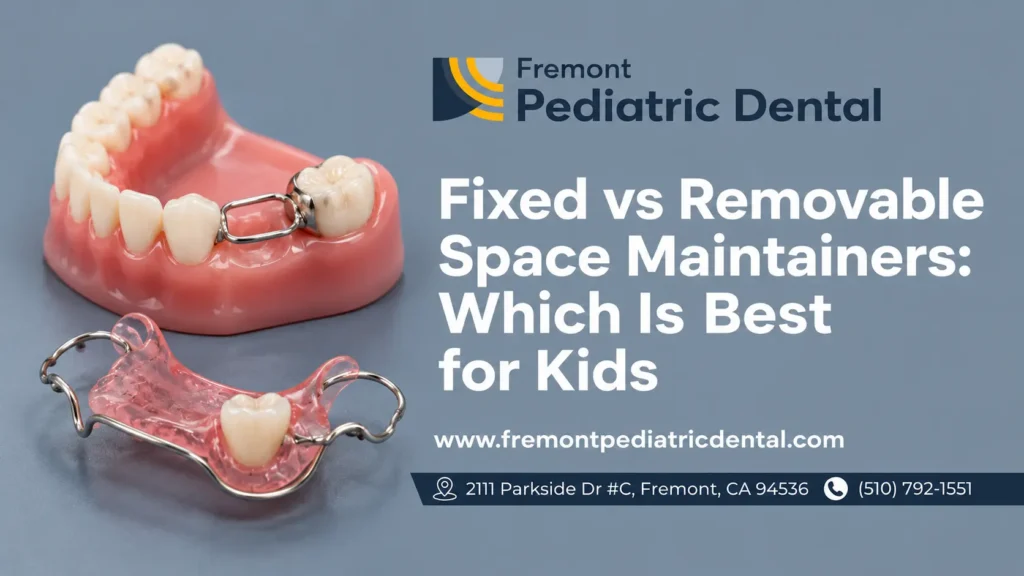
A fixed maintainer attaches to a nearby tooth and stays in day and night. The child cannot remove it.
Fixed Maintainer Advantages
It cannot be lost, forgotten, or left in a backpack. It protects the gap continuously and requires less responsibility from the child. This can make it useful for younger children or when the space must stay open for a long time.
Fixed Maintainer Drawbacks
Food can collect around the wire, so careful brushing is needed. Gum, sticky candy, ice, and hard foods may loosen it. Some children notice extra saliva or mild rubbing while they adjust.
How Does A Removable Space Maintainer Work?
A removable maintainer often looks like a small retainer. The child takes it out as instructed, usually for cleaning and sometimes for eating.
Removable Maintainer Advantages
It is easier to clean outside the mouth and may suit an older child who follows routines well. Some designs can also fill a visible gap.
Removable Maintainer Drawbacks
It can be lost, broken, forgotten, or accidentally thrown away in tissue. It cannot protect the gap while sitting in its case, so consistent wear matters.
Which Space Maintainer Fits Your Child?
A fixed or removable maintainer should match your child’s habits as well as the missing tooth.
Fixed Maintainer May Fit Better When
Choose this option when a child is young, often loses belongings, or may forget a wear schedule. It may also be preferred when a back tooth is missing or the gap needs protection for several years.
Removable Maintainer May Fit Better When
This option may suit an older child who can clean the device, wear it consistently, and store it safely. For example, a ten-year-old who already handles a nightguard responsibly may manage it better than a six-year-old.
Age is only one factor. Dr. Dinh also reviews the gap, nearby teeth, adult tooth timing, cleaning habits, and the child’s ability to follow instructions.
What Makes A Custom Space Maintainer?
A space maintainer is a custom device. The dentist measures the gap using a mold or digital impressions when available. A digital scan creates a detailed picture without placing mold material in the child’s mouth.
These pediatric dental appliances use different materials. Fixed options commonly include biocompatible metal, meaning dental metal made for safe use in the mouth. Removable options may combine a smooth plastic-like base with wire.
Digital X-rays may show how close the adult tooth is before a design is chosen.
Space Maintainer Care Tips
Fixed Maintainer Care
Brush around the wire twice daily and help younger children remove trapped food. Avoid gum, chewy candy, ice, and hard objects. Keep regular dental check-ups so the device and incoming tooth can be watched.
Removable Maintainer Care
Clean it as directed and place it in its case whenever it is out. Never wrap it in tissue or leave it on a lunch tray. Keep it away from pets, hot water, and direct heat.
When Do Space Maintainer Problems Need Help?
Call if a fixed device becomes loose, a wire bends, or an edge rubs the cheek. Contact the office if a removable maintainer is lost, cracked, or no longer fits. Ongoing pain, swelling, trouble eating, or an adult tooth appearing near the device also needs attention.
Do not bend, glue, or adjust it at home. The dentist can check whether it needs repair, replacement, or removal.
Which Space Maintainer Is Best?
Fixed maintainers are usually more dependable for younger children or those likely to forget a wear routine. Removable maintainers offer easier cleaning and flexibility but require consistent use and safe storage.
The best choice should fit your child’s age, habits, missing tooth, and expected wear time. A space maintainer visit gives an answer based on your child’s needs, not a general rule.
Why Choose Fremont Pediatric Dental?
Fremont Pediatric Dental gives families clear guidance when a baby tooth is lost early. Dr. Dinh carefully reviews the gap, your child’s age, daily habits, and incoming teeth before discussing options. Parents receive practical care instructions, follow-up support, and a child-friendly plan designed around comfort, safety, and long-term spacing needs.
Parent Space Maintainer FAQs
Does Every Early Lost Baby Tooth Need A Space Maintainer?
No. The need depends on which tooth was lost, your child’s age, available room, and how soon the adult tooth may appear. A dentist may use an exam and images to decide whether nearby teeth are likely to move into the gap.
How Long Does A Child Wear A Space Maintainer?
Wear time may range from several months to a few years. The maintainer usually stays until the adult tooth is close to coming in or the gap no longer needs protection. Regular visits help the dentist choose the right removal time.
Can My Child Eat Normally With A Fixed Maintainer?
Most everyday foods are fine, but sticky, chewy, and very hard foods can pull, bend, or loosen the device. Cut firm foods into smaller pieces, discourage chewing ice, and ask the dentist for food guidance based on its location.
What Should I Do If The Maintainer Is Lost Or Loose?
Call the dental office rather than waiting for the next routine visit. A loose fixed device can trap food or rub the mouth, while a lost removable device leaves the gap unprotected. Do not bend, glue, or replace it yourself.
Will A Space Maintainer Prevent The Need For Braces?
It can help preserve room after early baby tooth loss, but it cannot prevent every future alignment concern. Tooth size, jaw growth, habits, and natural crowding still matter. Its purpose is to protect the space, not straighten all teeth.